

Australian Muslims Report Surge in Islamophobic Attacks Following Bondi Tragedy

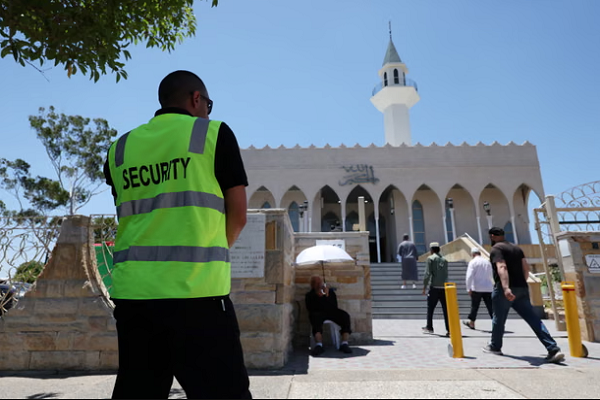
Threats and hate speech against Muslim Australians have surged in the wake of the Bondi beach attack, with one mosque receiving dozens of offensive phone calls and reports of people being targeted in the street.
As Australia’s Jewish community deals with trauma from the attack that killed 15 people at a Hanukah event, religious leaders say societal and political divisions has led to other groups being targeted by hatred.
The Islamophobia Register Australia received 126 reported hate incidents in the week after the 14 December shooting – 10 times more than it had received each of the two weeks prior.
A similar surge in incidents has been recorded separately by the Australian National Imams Council. Its vice-president, Ahmed Abdo, said Muslim women have been verbally abused and had been subjected to hand gestures imitating guns.
“There is a heightened fear,” Abdo said. “One woman … doesn’t want to actually leave her home because she wears a scarf as a Muslim woman, and she fears that she may be targeted. There’s a feeling [there is] likely to be hate violence directed towards Muslims.”
Police have alleged the Bondi attack was inspired by Daesh (ISIL or ISIS).
Muslim leaders and organizations have condemned the attack, with representatives attending vigils to mourn those killed.
But the day after the attack, butchered pig heads and other animal parts were left at the entrance to a Muslim cemetery in Sydney’s south-west.
A Queensland mosque and an Islamic school in Victoria were also vandalized with graffiti in the week after the attack.
Read More:
Separately, calls circulated on social media for a “Middle East” bashing at Cronulla beach, for which a man has been charged.
Security ramped up but community ‘resilient’
Abdo said some Sydney congregations had cut the amount of time they spent at mosques, leaving immediately after prayers were finished.
Others, like the Lakemba mosque in south-west Sydney, have increased their security presence.
Mohamed Mohideen, the president of the Islamic Council of Victoria (ICV), said the organization’s prayer center had faced skyrocketing hate mail and he had received at least 30 threatening phone calls.
“It manifests online, which is safe although it’s hate, or it will manifest in abuse, and it could also go down the pathway of physical harm and attacks,” Mohideen said.
Mohideen said the ICV has received reports of teenagers in hijabs and worshippers outside mosques being verbally abused since 14 December, which he added has resulted in more police patrols.
“We fear someone could do something at any time … but the Muslim community is very resilient. We are not going to claim victimhood, we are not going to hide.”
Mohideen said the political debate and rhetoric about “radical Islam” since the Bondi attack had intensified hostility towards the Muslim community.
“The Jewish community didn’t come out and attack the Muslim community … it was the politicians,” Mohideen said.
Read More:
On Tuesday, the New South Wales premier, Chris Minns, visited Sydney’s Masjid Al-Hidayah mosque at Rockdale with David Ossip, the president of NSW’s Jewish Board of Deputies. The mosque had honored a vigil for the 15 dead on Sunday.
Minns denied his language had encouraged division, and said if someone is “prepared to attack or marginalize or vilify a Muslim family or a Muslim cleric or a Muslim woman”, then police “have shown that they will tackle extremism or racism regardless of who is responsible for it.”
The mosque’s secretary, Jashim Uddin, said by lighting the menorah “we want to minimize the tension in the community.”
“We want to show that we are all together, not separate,” Uddin said. “It is not Muslim or Jew or Christian … we shouldn’t be finger-pointing [at] anyone.”
Source: The Guardian
