

Muslim Brotherhood Says Trump’s Terrorism Designation ‘Detached from Reality’

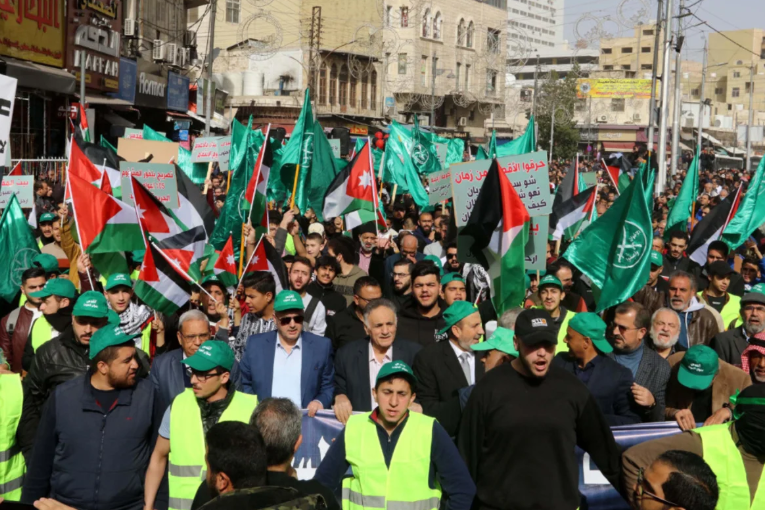
The Muslim Brotherhood said on Wednesday that Trump’s directive to begin designating certain branches of the group as Foreign Terrorist Organizations (FTOs) was “detached from reality.”
In a statement published on the group’s official X account, it argued that the allegation of involvement in terrorism was “unsupported by evidence.”
The group described the decision as politically motivated and stated that it “lacks any credible legal or security basis.” It warned that the order “sets a dangerous precedent” and could undermine both US security interests and regional stability.
The statement added that such a designation would encourage governments seeking to justify repression, collective punishment and economic sanctions.
According to the group, the move follows lobbying from Israel and the United Arab Emirates, which have long opposed the Muslim Brotherhood. It said that “the facts have not changed,” but that foreign pressure on Washington, particularly from “the UAE and Israel,” had increased and influenced US policy.
Read More:
Trump signed the executive order on Monday, beginning a review that could result in certain “chapters or other subdivisions” of the organisation being added to the US terrorism list.
The order cited alleged involvement in violence and destabilising activities by branches in Lebanon, Egypt and Jordan, saying such actions harm regional stability and US interests.
The Muslim Brotherhood rejected the characterisation, saying the organisation does not operate through formal “chapters” and noting that independent groups in different Muslim countries share elements of Islamic ideology but make their own decisions under local law.
The statement said these movements have long histories of peaceful political and civic participation and have committed to democratic processes and non-violent engagement.
Read More:
Founded in Egypt in the late 1920s, the Muslim Brotherhood emerged as a social and political movement opposed to British colonial rule. It was later targeted by nationalist governments such as those led by Gamal Abdel Nasser in Egypt and Hafez al-Assad in Syria. The group gained influence in the 1970s and 1980s as many Arab states embraced secular, authoritarian governance.
Its political standing rose sharply after the 2011 Arab uprisings. Egypt elected its first Muslim Brotherhood president, Mohamed Morsi, in 2012, before he was ousted in a 2013 military takeover led by Abdel Fattah el-Sisi.
The group’s role has long been a source of tension among regional powers, contributing to disputes involving Turkey, Qatar, Saudi Arabia and the UAE. Although regional ties have partially improved in recent years, the Muslim Brotherhood remains politically contentious, with several monarchies viewing it as a challenge to established rule.
Source: Agencies
