

Comprehensive Arbaeen Cultural Document Finalized Ahead of Int’l Congress

The announcement was made during a press conference on Sunday in which Hojat-ol-Islam Hamid Ahmadi outlined the programs of the Fifth International Congress of Arbaeen Cultural Activists, scheduled to take place from December 16 to 19 in the northeastern city of Mashhad.
Ahmadi, who also heads the Cultural and Educational Committee of Iran’s Central Arbaeen Headquarters, said Arbaeen is “a transnational, trans-sectarian and trans-religious phenomenon and a global movement,” adding that efforts should be made to further globalize the event and deepen its meaning.
He said the congress is intended to strengthen cooperation and synergy among Arbaeen cultural activists.
According to Ahmadi, the fifth edition of the congress will host 320 participants, including 100 guests from 20 countries, alongside Iranian attendees. Artists, poets, cultural activists, moukeb organizers, and university professors are among those invited.
Ahmadi described the review of the Comprehensive Arbaeen Cultural Document as one of the main pillars of the congress. He said the document has been discussed over 50 sessions and is now in its third revised version, which will be finalized at the congress.
Read More:
“The document includes a vision, principles and strategies,” he said, noting that responsibilities for implementing each strategy are clearly defined and framed within a civilizational and global approach.
He added that the congress will also examine challenges facing the globalization of Arbaeen and set priorities and approaches for Arbaeen 2026.
Other topics, including children, women, monitoring and assessment of Arbaeen-related issues, and new technologies such as artificial intelligence, will be discussed through 10 commissions and 18 working groups, he noted.
Ahmadi emphasized that Arbaeen provides an opportunity to strengthen relations between the Iranian and Iraqi peoples. He said the congress can contribute to greater empathy, cohesion and convergence, while helping improve cultural understanding and reduce challenges.
He noted that Arbaeen is no longer limited to the Najaf–Karbala route and is now observed in dozens of countries, including several in Europe, as well as Thailand and parts of Africa.
This, he said, reflects the broad potential of Arbaeen, which elites can use in the fields of cultural, political and public diplomacy.
Read More:
He also highlighted the people-centered nature of Arbaeen, describing it as one of the core principles of the cultural document. “We only coordinate the programs,” Ahmadi said. “Implementation is entirely carried out by the people.”
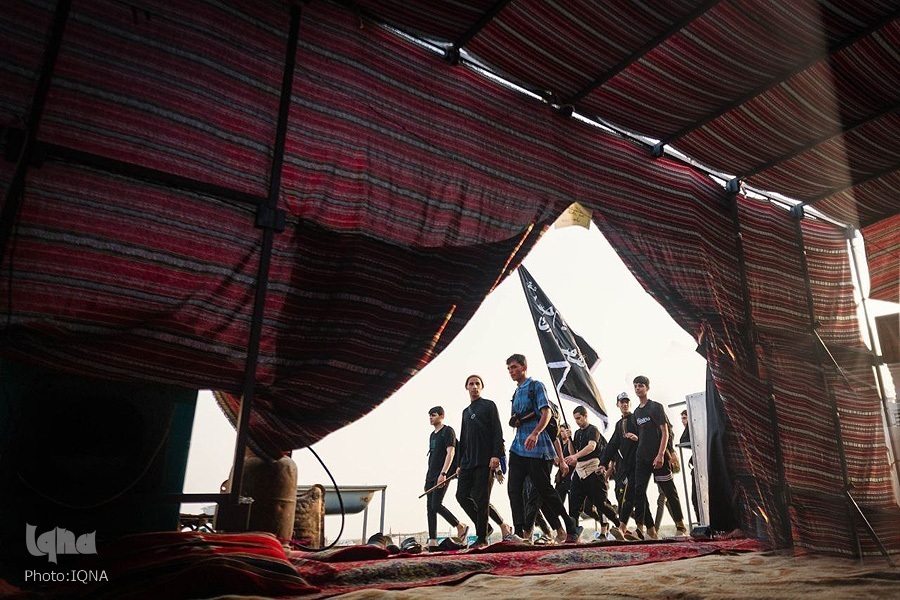
Arbaeen marks the 40th day after Ashura and commemorates the martyrdom of Imam Hussein (AS), the grandson of Prophet Muhammad (PBUH), in 680 AD.
Each year, millions of pilgrims walk long distances to the holy city of Karbala in Iraq, making it one of the largest annual religious gatherings in the world.
Beyond its religious dimension, Arbaeen has grown into a major social and cultural event, characterized by volunteerism, hospitality and cross-border participation, and increasingly viewed as a platform for intercultural dialogue.
4322728
