

‘State of Recitation’ Lauds Quranic Services of Late Egyptian Qari Mustfa Ismail

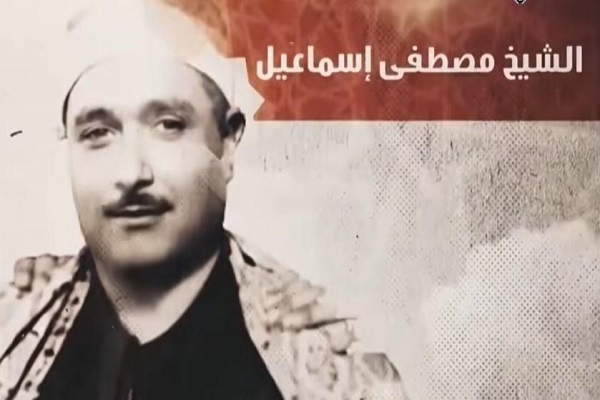
The new episode of the program was aired on Egypt’s satellite channels on Friday evening (December 19), Dar al-Hilal reported.
Master Mustafa Ismail was described as one of the most prominent Egyptian qaris in the modern era who impressed the Islamic world with his pleasant and masterful voice.
It was emphasized that Mustafa Ismail’s Quranic voice was a gift from heaven that touches hearts with its beauty and spiritual sensitivity.
Referring to the biography and Quranic legacy of the qari, the program’s hosts said he was innovative in Quran recitation and skilled in reciting with a unique style that combined deep memorization of verses and precise understanding of the meanings of the Quran.
Elsewhere in the program, host Aya Abdul Rahman highlighted the efforts of the Al-Azhar Quran (printing) Review Committee, considering this center to be the preserver of the Word of God in Egypt.
She praised Sheikh Hassan Abdel Nabi, an eminent Quran master and member of the jury panel of Quran contests who has dedicated his life to preserving the word of God and serves as a member of the committee.
This committee carries out its duty to preserve the text of the Quran scientifically, technically and carefully, and follows up and reviews the activities of any organization or association that wants to print the Holy Quran, and issues licenses to these institutions, she noted.
Read More:
Another part of the program was the recitation of Mohamed al-Qalaji, a teenage Egyptian qari who performed the recitation with mastery of the rules of Tajweed and special skill, and his recitation was met with public acceptance and praise from the judging committee.
Taha Abdel Wahab, a voice expert and authority on the Quran, lauded al-Qalaji’s recitation, stating that he is impressed by his performance every time, and his recitation is presented with mastery, confidence, and a special superiority.
He wished the young qari continued success in serving the Holy Quran.
Sheikh Hassan Abdel Nabi, deputy of the Al-Azhar Quran Review Committee and a member of the judging committee, also praised the recitation of al-Qalaji, saying this qari observed the rules of recitation well and was skilled in the rules of Tajweed, but sometimes he strained his voice to recite and perform the verses.
Taha Al-Numani, another member of the judging committee, also addressed the performance of the novice reciter, saying, “May God protect you and increase others like you and make you a sun that illuminates the sky of the Egyptian recitation.”
He emphasized that his performance gave light and spirituality to the competition.
Egyptian preacher Mustafa Hassani emphasized the importance of perseverance and patience in developing talents, stating, “Make this a rule in your life: whatever you do, continue with the same effort and, God willing, you will see the fruits of your hard work day by day.”
The State of Recitation program is produced in cooperation with the Ministry of Awqaf and the United Media Services Company in Egypt, with the aim of identifying talents and outstanding reciters from different provinces of the country.
This program is broadcast on the satellite channels Al-Hayat, CBC, Al-Nas, Misr Al-Quran Al-Karim, and the “watch it” platform, and the broadcast time of this program is 9 pm on Fridays and Saturdays every week.
Read More:
It offers a total prize pool of LE 3.5 million. The first-place winners in both the recitation and intonation categories will each receive one million pounds, in addition, they will have the entire Quran recorded in their voices and broadcast on the “Misr Quran Karim” channel.
They will even be given the honor of leading the Taraweeh prayers at the Hussein Mosque during the upcoming month of Ramadan.
The program features a high-level judging panel comprised of prominent religious and scholarly figures from the Islamic world: Hassan Abdel-Nabi, Taha Abdel-Wahab, Mostafa Hosny, Taha Al-Nuamani.
It also includes a number of special guests: Osama al-Azhari, Nazir Mohamed Ayyad, Ali Gomaa, Ahmed Na’ina, Abdel-Fattah al-Tarouti, Jaber al-Baghdadi, the British scholar Muhammad Ayoub Asif, and Morocco’s Omar al-Qazabri.
4323984
