

Malaysia Conference Stresses Transforming Unity from A Slogan to A Practical Strategy

The conference was held in Kuala Lumpur by the World Forum for the Proximity of Islamic Schools of Thought (WFPIST) in cooperation with the Malaysian Consultative Council of Islamic Organizations (MAPIM) and organizations supporting Palestine, and with the presence of Muslim scholars and thinkers from the ASEAN countries.
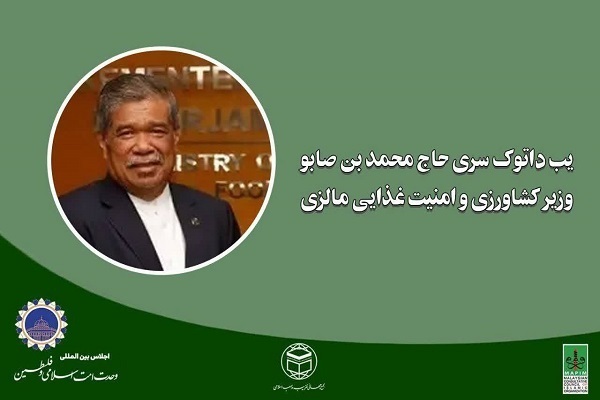
Addressing the event, Malaysian Minister of Agriculture and Food Security Muhammad bin Sabu underlined the importance of unity as a civilizational and institutional project.
He said unity is not merely a feeling, but always an institutional and civilizational project, adding that unity cannot be limited to slogans in speeches.
He also referred to the events in Gaza as “unprecedented devastation, genocide and moral collapse”, describing the vast dimensions of the humanitarian catastrophe as a “painful paradox,” and called the weekly demonstrations in global cities such as London, Paris and New York a sign that the global conscience is alive.
The Malaysian official emphasized, thought that mere condemnation will not change reality.
He called on Islamic countries to reclaim their moral and leadership role in defending justice by institutionalizing the principle of unity and adhering to consistent and principled positions on Palestine.
Read More:
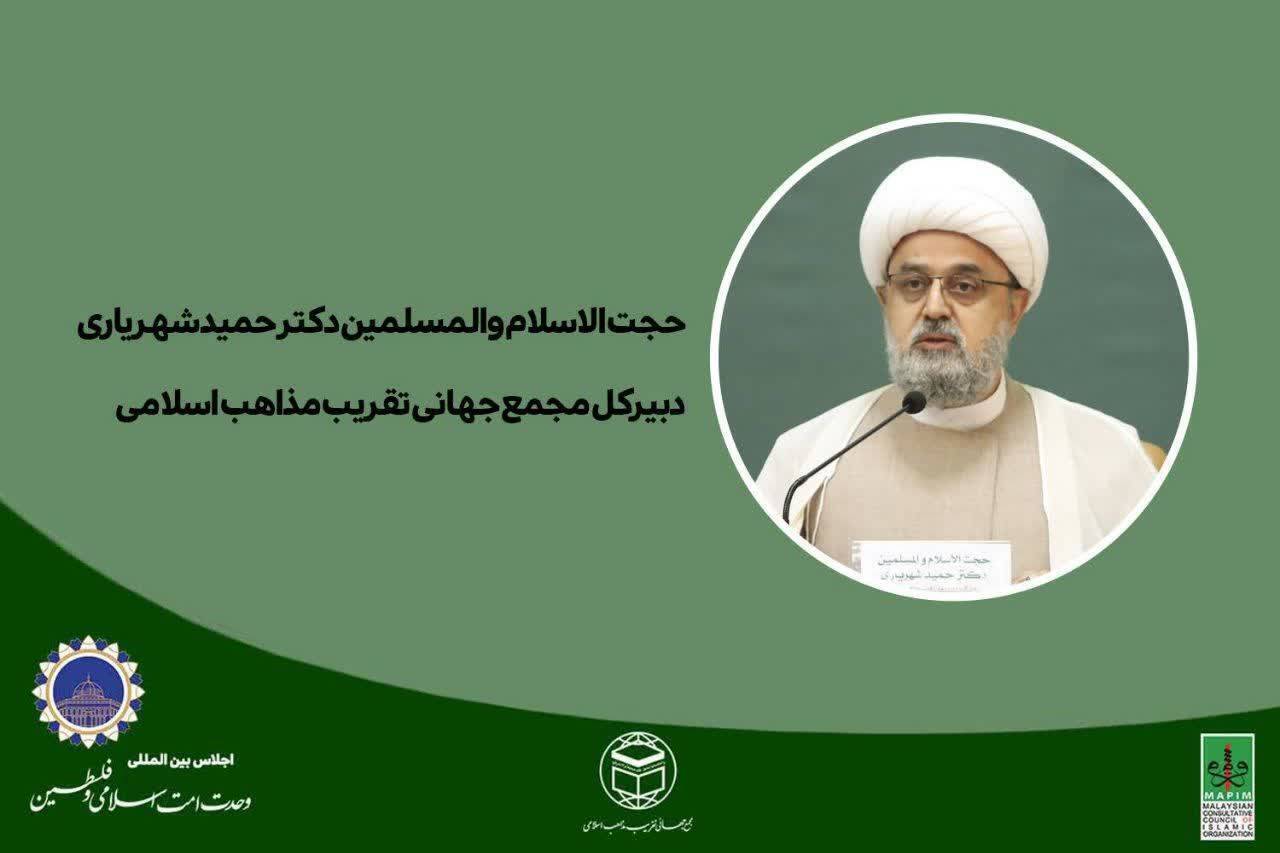
WFPIST Secretary General Hojat-ol-Islam Hamid Shahriari was the next speaker.
He said Palestine is the compass of truth in the world and should be recognized as a central moral and humanitarian priority.
The cause of Palestine is not only the cause of the Palestinians, but also the cause of all humanity, he stated.
He added, “The Palestinian issue is a moral, humanitarian and civilizational test for the Islamic world and the international community. The Palestinian issue is not merely political, but a fundamental confrontation between justice and oppression. Palestine is the compass of truth in the world and must be recognized as a central moral and humanitarian priority.”
Read More:
The cleric also said Islamic unity is based on shared values, moderation, dialogue, and cooperation between different religions, not homogenization.
“Unity does not require the elimination of differences, but rather the transformation of diversity into strength through rational dialogue and consensus.”
MAPIM chief Azmi Abdul Hamid in his speech emphasized the need to transform unity from a slogan into a practical strategy.
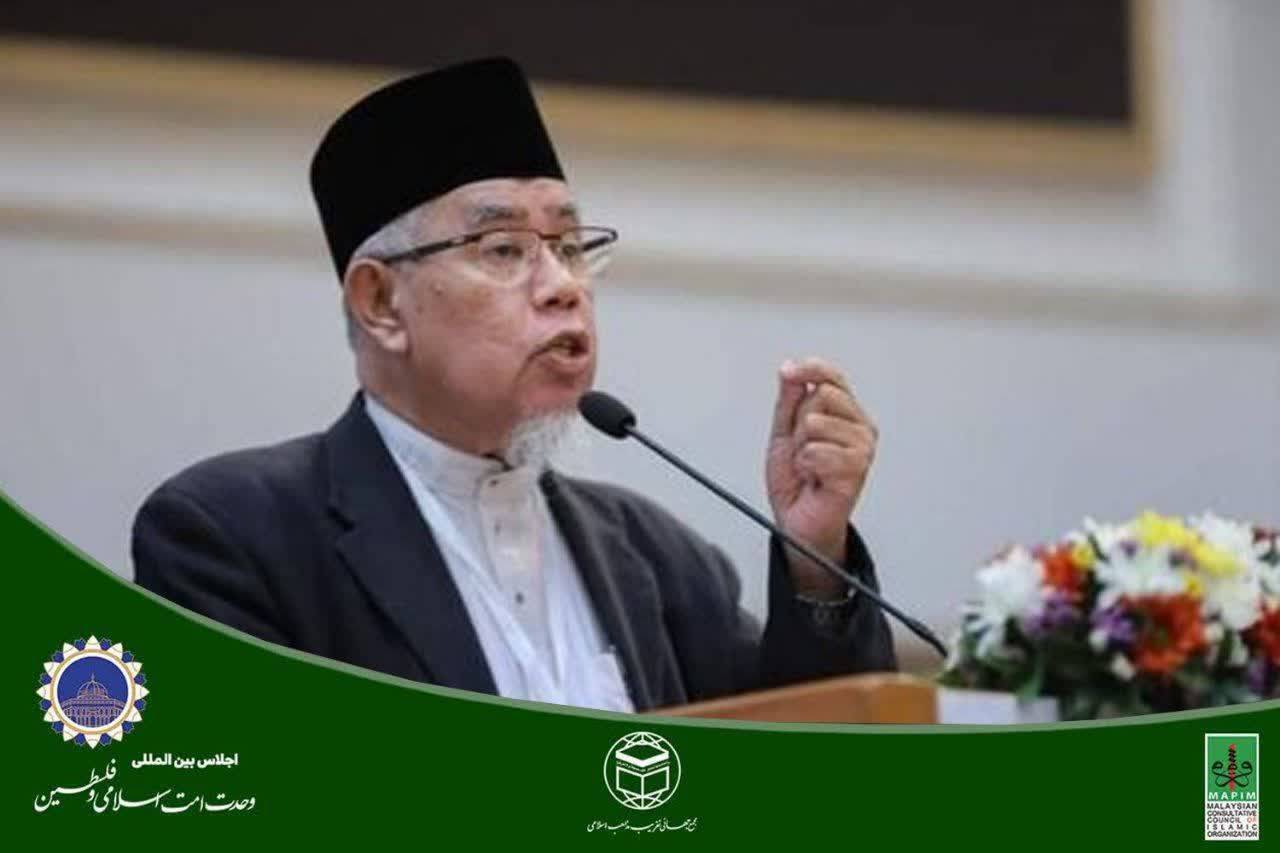
He considered unity to require “joint direction, discipline, and responsibility,” and said today’s unity must include unity in narrative, political pressure, economic action, legal initiatives, and humanitarian responses.
Stating that Palestine is not merely a political issue, he said as long as Al-Aqsa Mosque is occupied and Gaza is under siege, the Ummah cannot claim moral leadership.
Read More:
The Palestinian tragedy has been ongoing for more than 75 years, not only because of the occupying power, but also because of the division, neglect, and sometimes silence of the Ummah itself, he deplored.
He also described the situation in Gaza as “a sign of the collapse of the international moral order” and criticized “selective international law.”
4329608
