

Returning to Religious Roots Path to Saving World: ICRO Chief

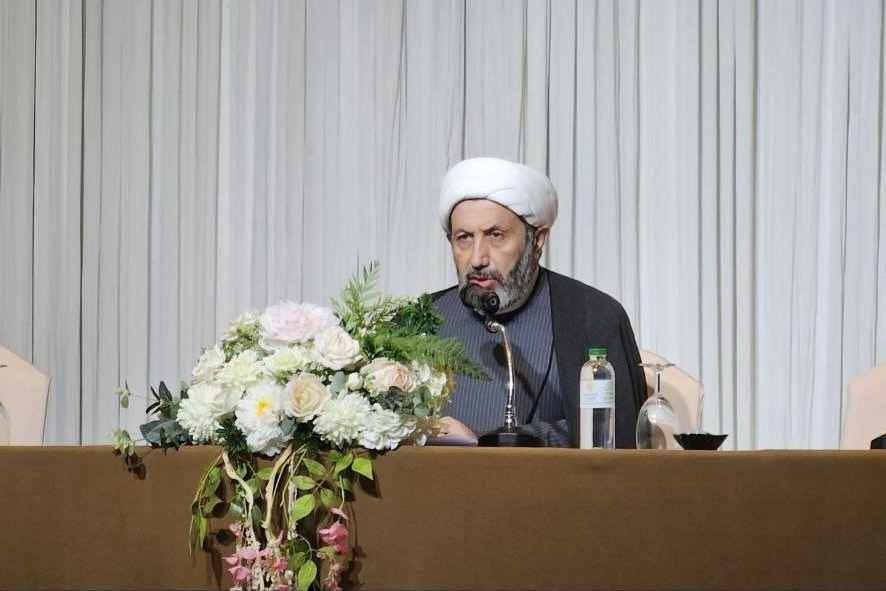
Hojat-ol-Islam Mohammad Mehdi Imanipour made the remark in an address to the Fourth Interfaith Dialogue Meeting in Thailand, held Tuesday at the Heritage Hotel in Bangkok under the title of “Global Challenges and the Responsibility of Religious Leaders and Thinkers”.
He emphasized that justice and peace are the answers to common human pains, and said, “Let’s promote a religion that respects dialogue and empathy, calls for rationality, spirituality and justice, and does not stutter in the face of oppression.”
Referring to the world in transition and the mission of religions in reviving rationality, justice and spirituality, he said, “I am very pleased that in this prestigious gathering, I have the opportunity to share with you the concerns that are not only the concern of religions, but also the common pain of humanity today. We live in an era where paradoxes and contradictions surround us. Today, humanity, with the help of science and technology, observes galaxies and splits atoms, but remains incapable of recognizing the closest being to itself, namely ‘humans’ and their ‘spiritual needs’.”
He added, “We are living in an era of ‘information explosion’ and ‘wisdom famine’. Reforming societies is possible when rationality, justice, and spirituality operate in a living and balanced relationship, reason illuminates the path, justice organizes the movement, and spirituality gives meaning to the destination.
Stating that the world today is facing three super-challenges, Hojat-ol-Islam Imanipour considered the first challenge to be the crisis of meaning and identity.
“Despite relative prosperity, modern man is suffering from emptiness and wandering. Young people have migrated from fundamental education to cyberspace and have lost their original identity.”
He considered the second challenge to be the crisis of justice and peace, and stated, “The gap between the rich and the poor, the North and the South, and the increasing wars that are shedding the blood of many innocent people, show that the current international structures are incapable of establishing justice and peace, and human rights have become unattainable. Today, peace through dialogue has given way to peace through power.”
Read More:
The ICRO Chief called the environmental crisis and moral rupture the third challenge and said, “Man’s rebellion against nature is a direct result of forgetting God. Man without spirituality, exposed to doubts around him, loses his way and considers the wrong path to be the way. The environmental crisis caused by modern culture has confronted human societies with serious dangers.”
He added, “The question is, where do religious elites, religious leaders, and divine thinkers stand in this terrible storm? Should religion be considered a personal matter that is not allowed to enter society, or should it be accepted that humanity today needs the teachings of religion and spirituality in society more than ever, and religious orders are a healing prescription for social pains.”
Hojat-ol-Islam Imanipour emphasized, “As an Iranian theologian who has breathed in the context of Islamic culture, I believe that the way to save the world lies in returning to the original roots of religion.”
He named three main missions for religious leaders and thinkers in the 21st century and said, “Fighting extremism and presenting a merciful image of religion is the first mission. Unfortunately, in recent decades, religion and religiosity have been marginalized by extremism. Some have called religion the opium of society, and others have defamed religion with backwardness and excommunication. It is our duty to shout ‘rational religiosity’ and ‘merciful religion’. We must resolve misunderstandings through interfaith dialogue.”
He emphasized that Iran has always been an environment for coexistence and empathy between religions, and after the Islamic Revolution, it has placed the issue of religious dialogue at the forefront of its cultural activities.
“For more than three decades, we have had extensive dialogues with all religions, including Christianity, Judaism, Buddhism, and other traditional religions.”
The head of the Islamic Culture and Relations Organization continued his speech by calling defending human dignity and confronting the unjust system ruling the world the second mission, adding, “Today, human rights have become a political tool to pressure independent nations. This is while religion teaches us that humans have equal rights and that color, race, and geography are not criteria for superiority. The responsibility of religious leaders is to be the voice of the oppressed. When children in Gaza and other parts of the world are bombed instead of enjoying security and dignity, the silence of religious leaders is helping to expand the war and accompanying the oppressor.”
He emphasized, “We must be demanding and challenge unjust global structures. We want peace for all and oppression for no one, of course, when we talk about peace, we mean a just peace. We must know that an imposed peace is the other side of an imposed war. A peace that is not based on “justice” is not sustainable, a peace that means surrendering to the oppressor is an unstable ceasefire.”
He continued, considering the third mission to be the revival of spirituality and a return to the teachings of the divine prophets and stated, “Our children, adolescents and youth are exposed to extremist education on the one hand and irreligious education on the other. New technologies have become unbridled and pervasive and have emptied society from within.”
Read More:
He emphasized, “My suggestion as a member of this important meeting is that we should take the ‘Global Coalition of Religious Leaders for Justice and Peace’ more seriously and focus on the common pains of humanity. Although dialogue is constructive, we should not be satisfied with dialogue. We need pragmatic dialogue and for this purpose we must seek ways of cooperation and interaction. Religion has come to take a burden off man’s shoulders, not to be a burden on him.”
He added, “Let us promote a religion that respects dialogue and empathy, cries out for rationality, spirituality and justice, and does not stutter in the face of oppression. I hope for a day when, under the teachings of the divine prophets, we have a world free from violence and full of spirituality and justice. A day when reason and love, hand in hand, rule the earth.”
4324592
